The story behind the book
The old man on the bridge
The story is set at the end of the Qin dynasty, one of the most violent periods in Chinese history. Zhang Liang came from a family that had served for generations as chancellors to the state of Han — one of the six kingdoms the Qin destroyed on its way to unifying China. When Qin Shi Huang made himself the first emperor, Zhang Liang spent his family's fortune hiring an assassin and ambushed the emperor's convoy at Bolangsha with an iron hammer meant for his carriage. The hammer hit the wrong one. Zhang Liang fled, changed his name, and went into hiding in a town called Xiapi.
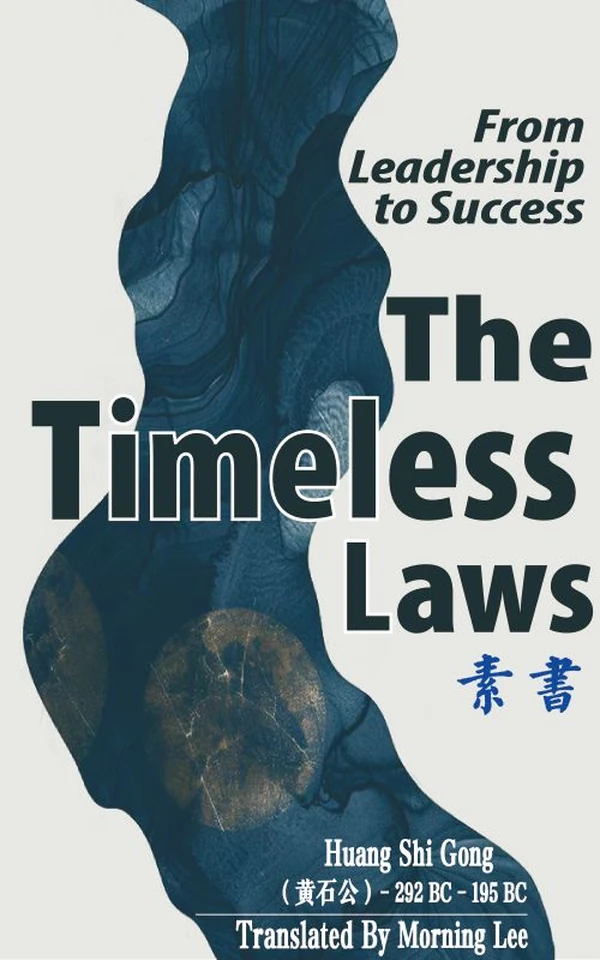
It was there, on a bridge, that he met an old man in coarse clothes who let one shoe drop off the bridge on purpose and told the young fugitive to go and fetch it. Zhang Liang was furious — but he was also careful, hiding as he was from the most powerful empire in the world — so he climbed down, retrieved the shoe, and knelt to put it back on the old man's foot. The old man laughed and walked off without a word of thanks. Then he came back and told Zhang Liang to meet him on the bridge again at dawn, five days later.
Zhang Liang showed up at dawn. The old man was already there, angry that a younger man had made an elder wait, and told him to try again in five more days. It happened a second time. The third time, Zhang Liang arrived before midnight and waited. When the old man finally appeared, he was satisfied — and only then did he hand Zhang Liang a book, telling him that studying it would make him fit to be "a teacher of kings." He added that in thirteen years, Zhang Liang would see a yellow stone at the foot of Mount Gucheng — that stone, tradition says, would be him.
The old man's name is recorded as Huang Shi Gong — "the Elder of the Yellow Stone." Zhang Liang studied what he was given, went on to become the chief strategist behind Liu Bang's rise, and is remembered as one of the three men most responsible for founding the Han dynasty, alongside the general Han Xin and the administrator Xiao He. He was enfeoffed as the Marquis of Liu, and a century later Sima Qian devoted one of the great biographies in the Records of the Grand Historian to him.